Before You Tell Them to Turn Off the Game, Try This Instead | Helping Reluctant Writers
Before You Tell Them to Turn Off the Game, Try This Instead
If you've ever had to tell your student it was time to turn off the game...
You probably already know what's coming next.
"Just let me finish this level!"
"I can't save yet!"
"I'll be done in five minutes!"
(Parents everywhere are smiling right now.)
Now, I'm not here to tell you unlimited screen time is the answer.
It isn't.
But before you immediately switch from "video game" to "English homework," let me throw out a different idea.
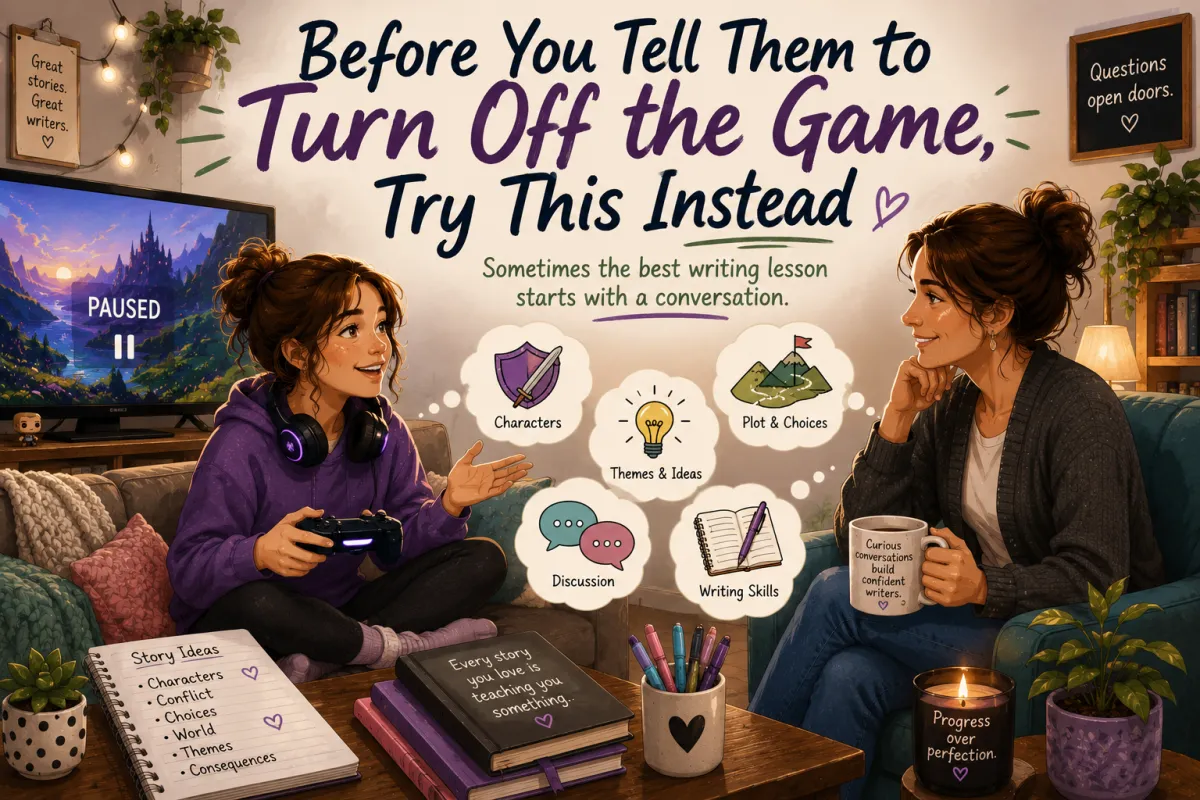
Ask them about the game.
Seriously.
Who's the most interesting character?
Who makes the worst decisions?
If you could change one part of the story, what would it be?
What makes the villain believable?
Which character would you trust if you had to survive that world?
Congratulations.
You just started a literary analysis discussion.
Students don't always realize they're already practicing English skills when they talk about the stories they enjoy.
They're comparing characters.
Explaining motivations.
Supporting opinions with evidence.
Thinking about cause and effect.
That's exactly what we ask them to do in English class.
One of the first questions I ask every new student is,
"Tell me what you're interested in."
Not because I'm making conversation.
Because I've found that students usually write better when they're writing about something they genuinely care about.
Once they're comfortable organizing their thoughts about a topic they enjoy, it's much easier to transfer those same skills to novels, essays, and school assignments.
So the next time it's time to turn off the game...
Maybe spend five minutes talking about it first.
You might be surprised how much English class is already hiding inside that conversation.


